Honouring lives cut short - addressing premature deaths of women post-incarceration and the naming of the Coming Home bursary fund
- Mar 2
- 9 min read
The death of a friend at 43, someone who served time alongside me, is a stark reminder of a harsh reality - women who have been incarcerated face a significantly higher risk of premature death after release. This loss is too soon, and it calls for urgent attention. Today, I want to share insights into this issue, honour her memory, and announce the official naming of our Coming Home bursary fund named in her honour to support women coming home from prison.
The reality of premature deaths among women after prison
Research shows that women who have served prison sentences face a much higher risk of dying prematurely compared to the general population. A study published on PubMed highlights that the risk of death for formerly incarcerated women is alarmingly high, often due to factors like chronic health conditions, substance use, mental health struggles, and lack of access to adequate healthcare after release.
The UK government’s annual report on deaths of offenders in the community confirms these findings. Women released from prison often encounter multiple barriers that increase their vulnerability, including unstable housing, limited employment opportunities, and social isolation. These challenges contribute to a cycle of hardship that can lead to early death.
Personal loss and the urgency for change
Losing a friend who shared the experience of incarceration brings this issue into sharp focus. She was vibrant and full of potential, yet the system failed to provide the support needed to sustain her health and well-being after release. Her death at 43 is a painful example of how the system neglects women who have served their sentences but continue to face life-threatening challenges.
More than that, Nic is the 5th woman I served my sentence with to have died since I left prison at the end of 2021. The 5th. I will let that sink in.
This loss is not just personal; it reflects a broader social failure. Women like her deserve better support to rebuild their lives and avoid the tragic outcomes that too often follow incarceration.
To share a more "Fran" style wording around this, I share the story of how we met
"Lovely Nic, who I was in prison with, has died. She was only 43. She served a longer than necessary (if necessary at all, prison sentence) and returned to unstable living conditions thanks to the justice system, unable and disallowed to return home to her family. She was instead, placed in a hostel and released with nothing, I visited her at the hostel, but even as a friend, I was not allowed in, she wasn't allowed visitors inside the building. We sat on a bench outside in the rain, as I unloaded bags and bags of things from home bargains - pyjamas, slippers, bedding, a cushion, homewares to make her little room feel less like the prison she had just left. Easy cook food, tins and noodles and fresh fruit, fizzy drinks, toiletries, and vapes galore and a little cash to get her on her feet no questions asked. She needed a friend who understood what that step back into life looked like, and I tried to give what I thought was best - bits and bobs and my time. She got back on her feet, moved into her own place just a mile away from where Sarah and I live, she got it spick and span, her priority was space for her granddaughter to sleep over and a big tv; for movie nights and cosy times with the family she regained. Bright shiny wooden floors and a flatscreen the odeon would envy, sofa with scatter cushions, bougie lamps, a bit of bling, it was all very Nic. She was getting back to life, slowly, because the system made it so. Now she's dead. Too soon and like so many before her. I met Nic 5 years ago, when I was shipped to open prison from HMP Styal, a group of 10 of us gathered in a quarantine bubble from prisons all over the North and Midlands, we formed our own Covid bubble. And we formed our friendships in this strange new place - open prison. Two weeks of intense "getting to know you," because it was just us, locked in a brighter, lighter space, but a prison non the less. The first few days were met with tension, as the officers dropped off Level 1 and Level 2 functional skills papers and asked us all to complete them, Maths and English. No input from them, just pens and paper and get it done so we can see who's capable of what and who needs what from education and / or employment. A daunting task for any to recall a maths problem. A fear inducing moment for a few of the girls. And lo' a knock on my door, a sheepish Nic "you were a teacher or something right?” I looked up, “yeah, apprenticeships,” she came in and sat down on my little green bedding with the functional skills English paper in her hand – “can you help me with this? I don’t want them to think I’m stupid,”
We talked it through, we sounded out some words, we got a piece of paper and folded it into a ruler shape to block out chunks of text and took it line by line. Nic wasn’t stupid, she was the absolute opposite, what she was, was labelled. In school. In court rooms. In prisons. She was dyslexic and overwhelmed by the thought of having to do an exam on her own surrounded by strangers.
I marched her into the living area, faux leather sofas and a small television, and I announced to the room “there’s no point us all fretting over these exam papers, so why don’t we go through them together as a group?”
“won’t they notice if all our answers are the same?” said one lady, “so?” I replied.
“we will work through them together, team work, and then its done, nobody gets stressed, and they (education) get what they want,”
And so we did.
Me and my band of merry functional skills students for the day, and what a laugh we had. First the maths papers, working out the right amount of fence a farmer needs to buy to fence his field – some of these girls were known for their ability to count so working out a bit of fencing was easily negotiated and we applied that naughty logic to the task at hand, if anything, I learned more than they did that day.
Then the English papers, we rattled through them, levels one and two, everyone put their names on their papers, stacked them on the table infront of the sofas and then spent the rest of the afternoon watching tv and talking to eachother about happier things.
It wasn’t the first time Nic asked for my help with papers, she appeared at my door a few times more with legal paperwork, and we talked it through so she could make sense of it. She swore me to secrecy as to its contents and that remains the case, and will always be. But she trusted that she could ask me, and we held that trust to the end.
The women could hide things in places like no other, she was queen of the kitchen grift and I loved her for it. One day she appeared at my door, she had seen a Jamie Oliver segment on TV and he was cooking a carbonara, she said she’d love it, I said if she could get her hands on some bacon rashers, I’d sort the rest – I bought a tin of cream, a bag of pasta, a tub of grated parmesan (that had never seen an Italian cheese in its life) and some eggs. Hey presto. Or hey pasto if you prefer! One night upon returning to the prison from my day job, several rashers of bacon appeared. I didn’t ask where or how they were stored or for how long before making an appearance, and instead, cooked a group of us a spagehetti carbonara. Grated cheese mixed with some egg yolks, thrown into some boiled pasta, dotted with some greasy and delicious crispy bacon, sprinkle of cream (a bastardisation, I know) and on a summers evening in York, we sat with bowls of pasta in the sunshine on a picnic bench, pretending it was a normal life.
I couldn’t make it to her funeral, but I visited her grave this weekend, to lay flowers, and have a chat, I gave her a telling off for smoking too many vapes, cigs and other, and then apologised for not checking in as much as I could have done, even though we did have some hilarious back and forths to keep us laughing lately. I reached out to her family to pass on my condolences and ask for their blessing in naming our bursary fund after her, they welcomed the gesture. And so we keep her alive in our own way.
In many ways, Coming Home exists because of women like Nic, she was another lens to look at the world and how it fails women like us, and how it’s the power of ourselves and our people that put our lives back together. Nic rebuilt her life. Despite prison. Despite probation. No statutory service helped her do that. She did that. We do that every day. The resilience of women who have been failed by the justice system is something to marvel. We are power. And when one of us falls too soon, its on the rest of us to stand together and stand taller and say – enough,"

Barriers women face after prison
Women leaving prison face unique challenges that contribute to their risk of premature death:
Healthcare access
Many women have untreated or poorly managed health conditions. After release, accessing consistent medical care is difficult due to lack of insurance, stigma, or logistical barriers.
Mental health and substance use
Mental health disorders and substance use are common among formerly incarcerated women. Without proper treatment and support, these issues can worsen, increasing the risk of overdose or suicide.
Housing instability
Safe, stable housing is critical for recovery and reintegration. Unfortunately, many women struggle to find housing, leading to homelessness or unsafe living situations.
Employment challenges
Criminal records often block access to jobs, leaving women financially insecure and vulnerable to exploitation or relapse into harmful behaviours.
Social isolation
Rebuilding relationships and community ties is difficult after incarceration. Isolation can worsen mental health and reduce access to informal support networks.
The Coming Home bursary fund named, in Nic's honour
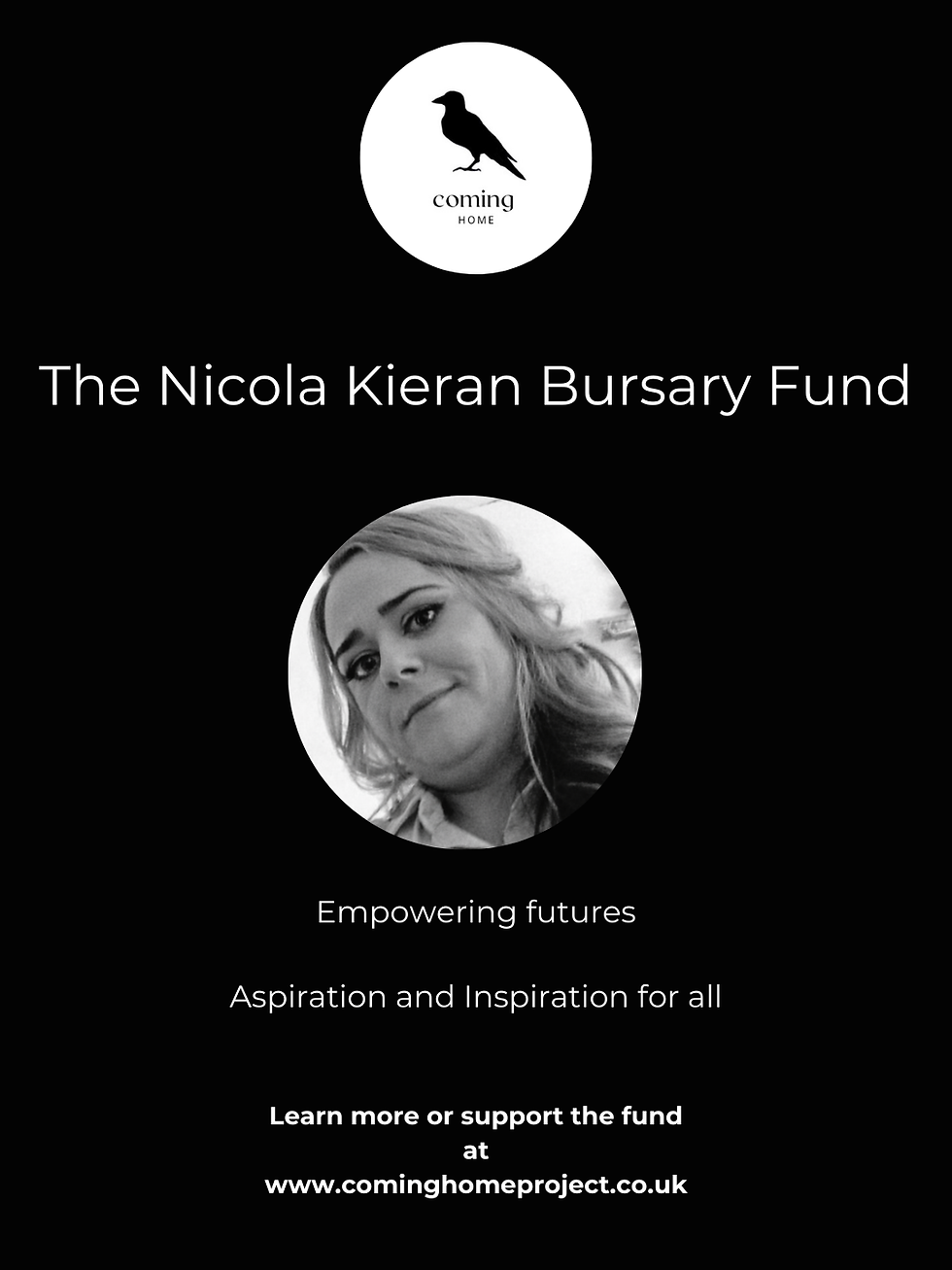
To honour her memory and address these urgent needs, we are giving the Coming Home bursary fund a name - The Nicola Kieran Fund. This fund will continue to provide financial support to women leaving prison, helping them access healthcare, housing, education, and employment opportunities.
The bursary aims to:
Provide housing assistance
Offer grants for rent deposit contributions or temporary housing to prevent homelessness. Provide emergency accommodation in hostels and hotels for those released from prison with no fixed abode or immediate support.
Provide life and household essentials
Home starter packs, grocery shops, travel cards, phone credit, electronic devices, clothing and toiltries packs.
Facilitate education and training
Provide our courses or vocational training that improve job prospects.
Encourage community connection
Support programs that build social networks and reduce isolation.
By naming the fund after my Nic, we keep her memory alive and turn the uncessary loss of a resilient woman, into action. Her story is a powerful reminder of why this work matters.
What needs to change to prevent premature deaths?
Addressing premature deaths among formerly incarcerated women requires systemic change:
Improved healthcare continuity
Ensure women receive coordinated care before, during, and after release. This includes mental health and substance use treatment.
Housing policies that prioritise stability
Governments and communities must create pathways to safe housing for women leaving prison.
Employment support programs
Remove barriers to employment and provide job training tailored to women’s needs.
Community-based support networks
Invest in peer support groups and community organisations that help women rebuild social ties.
Policy reform and awareness
Raise public awareness about the challenges faced by formerly incarcerated women and advocate for policies that protect their rights and health.
How You Can Help
Everyone can play a role in supporting women after incarceration:
Volunteer with us and / or local reentry programs
Offer time and skills to support women’s transition back into the community.
Advocate for policy change
Contact local representatives to push for reforms that improve healthcare, housing, and employment access.
Educate yourself and others
Share information about the risks women face after prison and the importance of support.
Remembering her and moving forward
Her death at 43 is a loss to many, and it highlights a crisis too often ignored. By sharing her story and naming our bursary fund, we honour her life and commit to making a difference for others. The journey after prison should not be a path to early death but a chance for healing, growth, and hope.
Together, we can build a future where women who have served their sentences receive the support they need to live full, healthy lives.


Comments